
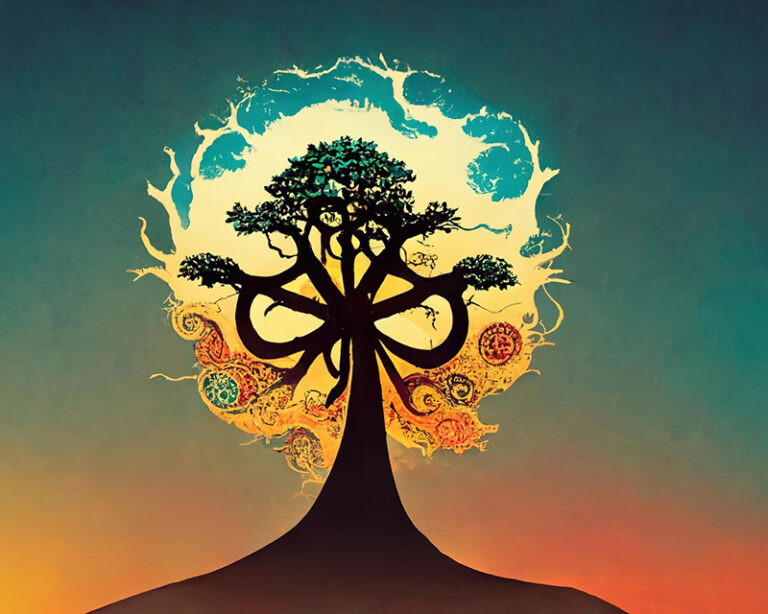
Psychosynthesis is central to the holistic ethos of the Irish College of Psychosynthesis and Psychotherapy (ICPPD). It is introduced as a core module in Year 3 of the BA (Hons) in Holistic Counselling and Psychotherapy and is also offered through a 30-hour CPD Professional Certificate in Psychosynthesis for professionals who wish to integrate this approach into therapeutic, educational, or care-based settings.
What Is Psychosynthesis?
Psychosynthesis is an integrative psychological approach that understands the person as a dynamic unity of body, mind, heart and spirit. At ICPPD, this perspective supports both personal development and professional formation, encouraging learners and practitioners to engage with the full range of human experience.
Rather than focusing solely on pathology, Psychosynthesis emphasises growth, meaning, and the movement towards psychological integration and wholeness. It recognises both personal strengths and challenges as essential elements of development.
Psychosynthesis, Personal Development, and the Spiritual Dimension
A common question is how Psychosynthesis addresses personal and spiritual development, and what is meant by the term “spiritual”.
At ICPPD, spirituality is not associated with religion or belief systems. Instead, it refers to the vital, animating principle of human life and the inner dimension connected to meaning, values, purpose, and connection.
The word spirit derives from the Latin spiritus, meaning “breath”, and has long been linked to the non-material aspects of human experience. Within Psychosynthesis, spirituality may be understood as an inner path towards discovering the essence of one’s being, a connection to deeper values, or an awareness of a unifying or transcendent dimension of life.
This understanding allows spiritual themes to be explored ethically and safely within therapeutic and educational practice.
Transpersonal Qualities and Human Potential
Psychosynthesis draws on the work of Carl Jung and other contributors to psychology, psychotherapy, and anthropology. A key concept within this approach is the recognition of transpersonal qualities, understood as universal human capacities that extend beyond the personal self.
These qualities include compassion, creativity, courage, love, joy, wisdom, will, harmony, gratitude, freedom, and meaning. Psychosynthesis views these not as abstract ideals, but as lived capacities that can be developed and embodied through reflective and experiential practice.
Human development is understood as a movement away from fragmentation and suffering and towards integration, vitality, and purpose, while acknowledging both the light and shadow aspects of the psyche.
Integrating Psychology and Mysticism
One of the distinctive features of Psychosynthesis is its integration of psychology and mysticism. Psychological work is enriched by a sense of meaning and purpose, while spiritual traditions are supported through psychological insight and integration.
This synthesis was central to the vision of Roberto Assagioli, the founder of Psychosynthesis.
Assagioli proposed that through Psychosynthesis, individuals may discover unknown abilities, authentic vocations, and higher potentialities seeking expression.
Soul, Meaning, and Application
Psychosynthesis places soul at the centre of psychological work and honours both the creative and challenging aspects of human experience. It creates a reflective space in which individuals and groups can explore meaning, values, and direction in life.
While widely recognised as a form of psychotherapy, Psychosynthesis is applied across many fields, including education, healthcare, social work, leadership, creativity, parenting, and everyday life. At ICPPD, it is taught as a living, practice-based psychology that supports both inner development and meaningful action in the world.